
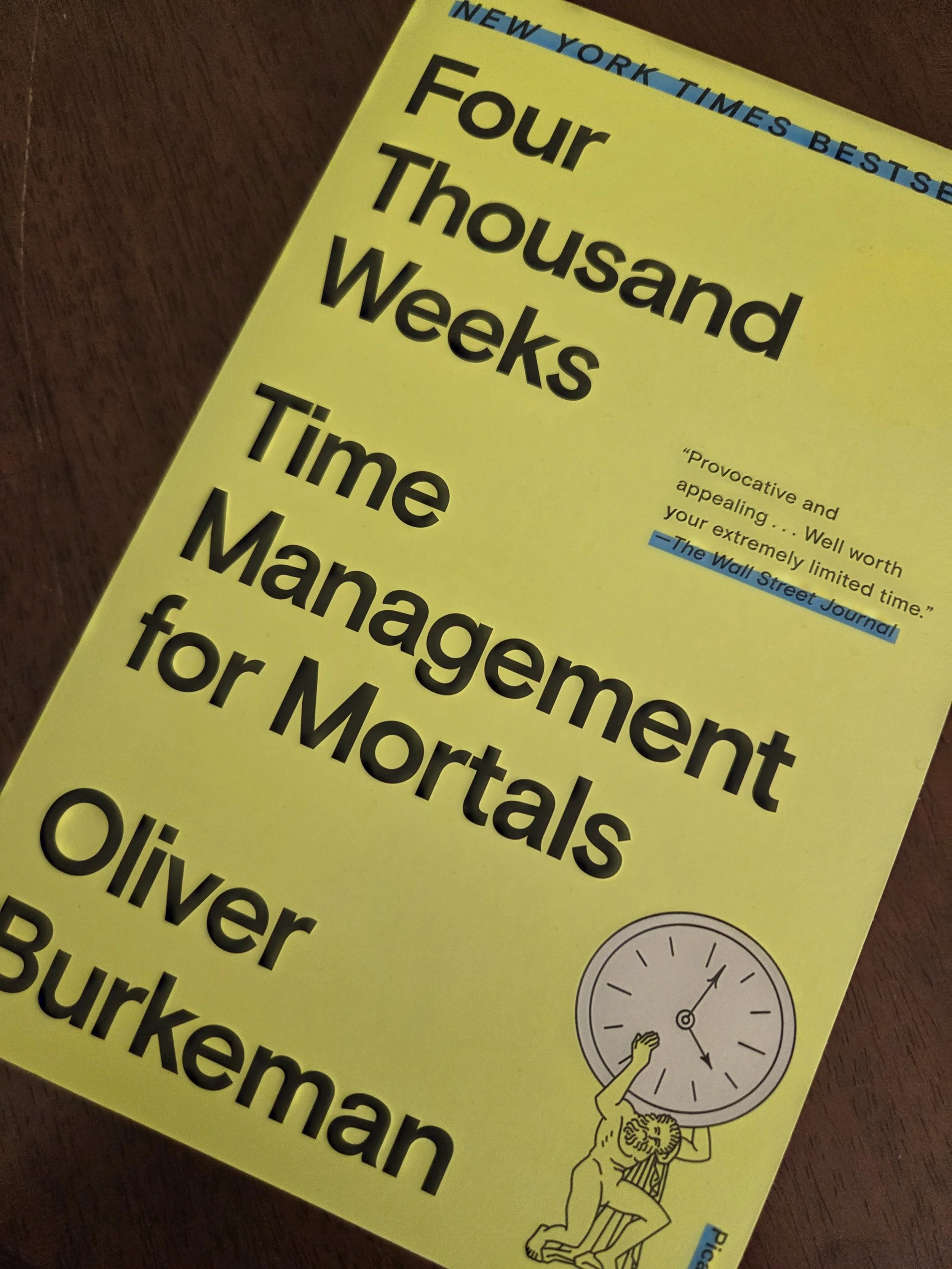
Eight Unconventional Books on Writing and Creativity
In addition to craft books, I regularly read books that are more geared toward mindset.
Having the right mindset is important for creatives. We face isolation, rejection, disinterest, market forces, negative reviews, and so many things we have no control over. Every day on social media, I read a post from a writer who is ready to throw in the towel.
An Analysis of Twelve First Lines and Why They Work
The first line of your novel is an invitation to the reader:
It invites them into the world of the story.
It forces them to ask a question that they want answered.
It lets them know the tone of the story: humorous, dark, quirky, contemporary, historical…
It introduces a place or a character.
What’s the Point? (Of Your Story)
When I’m working with a coaching client, one of my first questions about their book is: What is the Point?
I don’t mean “what is the point of writing it at all” but “what life truth are you trying to convey to the reader?”

A Glimpse Into the Final Editing Process for My Book
I received an email from my editor with her final editing requests before my novel is published early next year. So I’m spending the next couple of weeks dealing with all those pesky things that are still not quite right, even after multiple drafts and edits.

Dreamwalking Your Writing
Do you remember your dreams? Do you use them as jumping-off points for your writing?
When I ask this question, I get a variety of responses:

Why You Should Read (and Write) in Different Genres
I recently signed up for a poetry class, or rather a series of classes. I don't think of myself as a poet, but a prose writer. I like this because it’s self-paced, but with an opportunity to connect at some live sessions if I want to. In other words, I can write bad poetry without comparing myself to others.

Is an MFA Still Worth It in 2026?
Let’s be real: do you need an MFA?
No, of course not.
But MFA programs, although no longer at their peak, remain a popular option for writers who want to do a deep study of their craft.
MFA programs are, of course, a major commitment to your writing. And they come with a hefty price tag. With so many other options out there, why bother?

Your Fall 2026 Writing Plan
I don’t care when fall “officially” begins, September 1 always feels like the turning of the wheel into fall for me. Certainly, after Labor Day weekend here in the U.S., there is a very “back to school” vibe. Fall is my favorite season, to boot.

Seven Things an Agent Looks for in the First Few Pages
How many times have you gone over and over your first ten pages, or maybe your first chapter?
Chances are, you’ve obsessively polished them again and again, hoping to make them perfect. They probably got more attention than the entire rest of the book put together.
Of course, the first chapter is crucial, whether you are looking for agent representation or not. Your potential readers may pick up the book, read the first few pages, and if it doesn’t grab them, put it back down.

How to Integrate Beta Reader Feedback and Create a Revision Plan
So you’ve sent your beloved manuscript out to several beta readers you trust. They’ve sent back their notes and comments, and now you have to go through it all and work out what to integrate into your story, and how.
It can seem overwhelming. Where to start? How to do it effectively, in a way that actually makes your book better?

How to Think (and Write) Like Leonardo da Vinci, Part VII: Connessione
Connessione, or connections, are crucial to a writer. We end this series thinking about the connections that feed us and sustain us as writers.
This was brought home to me recently when I visited a fellow writer friend. We spent a lot of time talking about books, writing, creative writing pedagogy, storytelling… I always learn so much from her, and other writer friends.

How to Think (and Write) Like Leonardo da Vinci, Part VI: Corporalità
Corporalità means, of course, “corporeality.” But what does that have to do with writing? We are, for better or worse, corporeal beings. That is a given.
In writing, it has two meanings:
Taking care of yourself
Embodying character

How to Think (and Write) Like Leonardo da Vinci, Part V: Arte/Scienza
Writing is a delicate balance of “Art and Science.” Or rather, imagination and analytical thinking. The trick is to find the right balance, and to know when to apply the art, and when to apply the science. It requires using our whole brain - in the right way, at the right time.

How to Think (and Write) Like Leonardo da Vinci, Part IV: Sfumato
What the heck is sfumato, you may ask? It can be variously translated as “smoked,” or “going up in smoke,” or “fading away.”
So what does it have to do with writing?

How to Think (and Write) Like Leonardo da Vinci, Part III: Sensazione
Try this:
Where are you right now?
What do you see around you?
What can you hear?
What can you smell?
Is there any sense of taste in your mouth?
What do you feel in your body? (the seat below you, the floor, the air wafting by…)

How to Think (and Write) Like Leonardo da Vinci, Part II: Dimostrazione
“Dimostrazione: A commitment to test knowledge through experience, persistence, and a willingness to learn from mistakes.”
This is the definition of Dimostrazione, the next da Vinci principle. It can be translated as “demonstration,” “proof,” or “evidence.”
At first glance, you may wonder how this applies to writers. To which I would say:

How to Think (and Write) Like Leonardo da Vinci, Part I: Curiosità
Like many people, I’ve long been fascinated by Leonardo da Vinci. His insatiable curiosity, passion, creativity, experimentation, and the incredible art he’s left us all speak to his genius in a wide array of endeavors. If you haven’t read Walter Isaacson’s brilliant biography, Leonardo da Vinci, I highly recommend it.
Michael J. Gelb’s How to Think Like Leonardo da Vinci: Seven Steps to Genius Every Day, is a mini-biography and workbook, outlining seven steps he sees as the key to da Vinci’s creativity:

The Best Books I’ve Read So Far in 2026
It’s time for my semi-annual roundup of what I’ve read and recommend this year. I’ve read 28 books so far, which is about average for me. Though I’m not someone who really cares about quantity of books - I don’t get the point of people who, say, try to reach a goal of 100 books per year, or whatever. I’m glad they’re reading, but it’s not a race.

How to Reread Before You Revise
I’ve written before about how to do a deep revision, the kind that actually improves your manuscript instead of just doing line edits and proofreading (see Red Light issues, Yellow Light issues, and Green Light Issues).
I always say Step One is to reread your manuscript, but until today I’ve never mentioned how to do that effectively.

Why You Should Write the Query Before You Write the Book
I follow various agents on Substack, as well as on other social media, because they usually have good advice not just about what they are looking for, but about the publishing industry as well.
Since they see so many queries - and so many that don’t work - I pay special attention when they talk about query letters.