Eight Unconventional Books on Writing and Creativity
In addition to craft books, I regularly read books that are more geared toward mindset.
Having the right mindset is important for creatives. We face isolation, rejection, disinterest, market forces, negative reviews, and so many things we have no control over. Every day on social media, I read a post from a writer who is ready to throw in the towel.
I get it. I’ve been subject to the exact same negative forces. It’s part of the game. When you view it as that - as something that just exists, independent of you, not anything to take personally - something eases up. There is no personal raincloud hovering over you. Yes, it sucks to get drenched on occasion, but storms happen. Great books are rejected. Ads don’t always lead to sales. Someone doesn’t like what you write, or how you write it. And so on. It’s a resilient mindset that will get you through these storms and keep you writing.
If you are in it for one particular goal and not for the journey itself - whoo boy, you are going to have a rough time when things don’t go the way you hope or expect. The creative life is a journey. It doesn’t mean you can’t have goals, or hopes. It means you recognize them but aren’t solely motivated by them.
Below are some of the books I think are most valuable for writers who are looking to develop a strong mindset and the skills that will lead you to be creatively productive even when it’s hard.
These books weren’t written for writers per se, but their lessons are very applicable to the writing life.
Mindset: The New Psychology of Success – Carol S. Dweck. This is the foundation of mindset research. She talks about the "growth mindset” vs. the “fixed mindset.” Many of us grow up with a fixed mindset. We believe that we are one way, have certain talents, are “smart” or not, and that’s it. However, Dweck finds that we can all develop a growth mindset, that allows us to learn from failures and not take them as evidence of a personal lack. Written before ideas of neuroplasticity came into vogue, it tells you why and how you can develop a growth mindset at any age.
The One Thing: Surprisingly Simple Truth About Extraordinary Results – Gary Keller and Jay Papasan. A book on developing focus, and why prioritizing your time to focus on what truly matters to you is crucial to achieving success. For too many writers, writing is what they do “when they get time.” And yet, the time doesn’t come easily, and when it does, they’re pulled into easy distractions, scrolling their phones, playing games, checking email… This book will help you reorient your mind around prioritizing your time and “decluttering” your life.
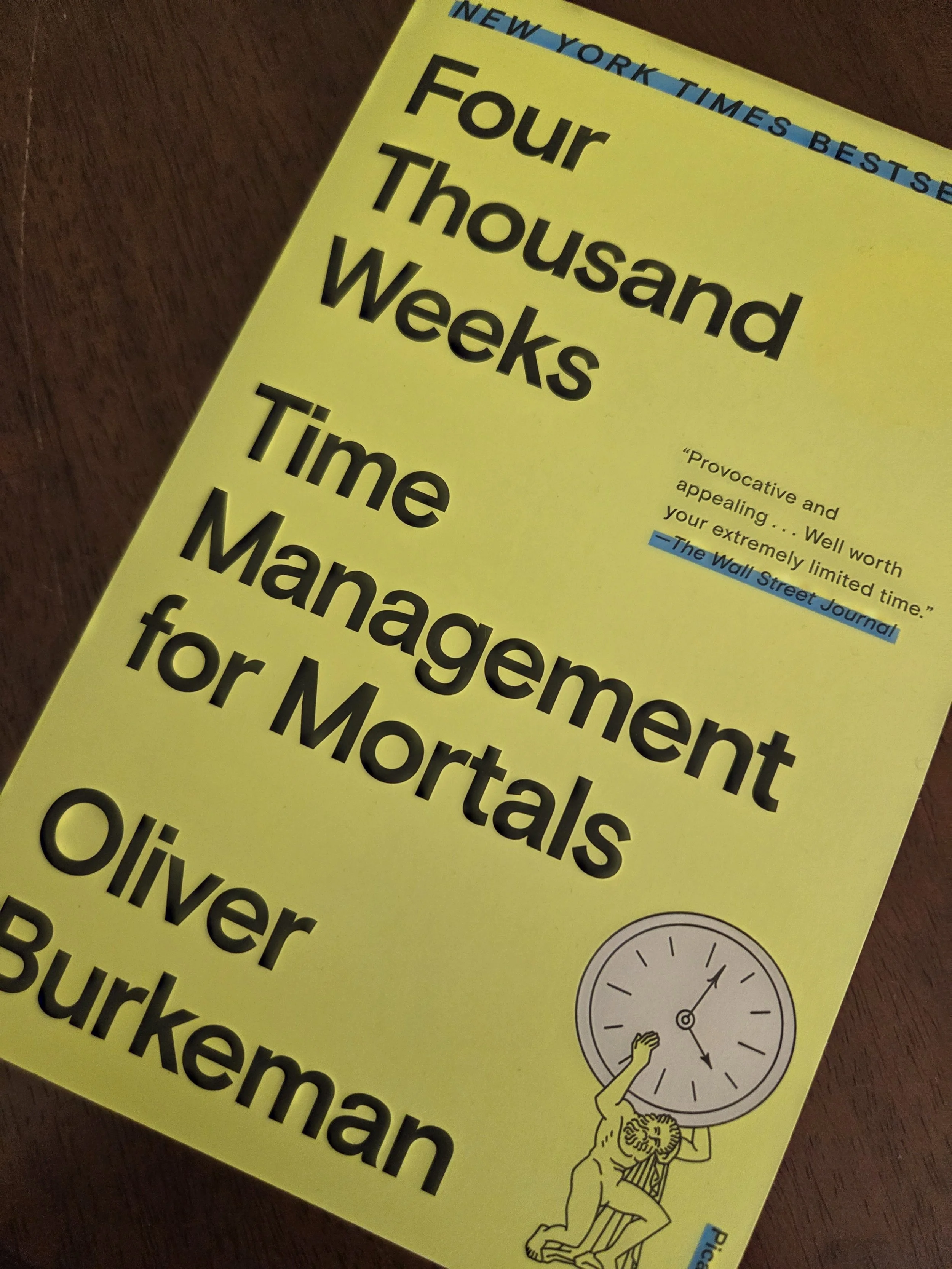
Four Thousand Weeks: Time Management for Mortals – Oliver Burkeman. 4000 weeks is about how many total weeks the average person has in their lifetime. You may get a few more, or a few less. This sobering realization may make you realize that you only have a limited amount of time to do what you really want to do. Rather than despairing, or trying to squeeze in everything, Burkeman says the way to create a meaningful life is to embrace this time limitation, and focus on what really matters.
Deep Work: Rules for Focused Success in a Distracted World – Cal Newport. Another classic, the lessons it imparts are needed now more than ever, as we become more distracted by the day. In order to write, we need to be able to maintain deep focus for extended periods, a skill that is rapidly eroding due to the endless scroll that occupies so many of our hours. Newport focuses on four rules to help us overcome distraction: work deeply, embrace boredom, quit social media, and drain the shallows (reduce and manage the amount of busywork that consumes your day). His “rules” may strike some as unrealistic or even counterproductive to creativity (schedule every minute?), but the book will get you thinking about how to make sure your brain retains your ability to do the deep work writing requires.
The 80/20 Principle: The Secret to Success by Achieving More with Less – Richard Koch. The 80/20 Principle refers to what is known as the Pareto Principle, which says that 80% of success comes from the top 20% of effort. Even when we’re writing, a lot of our time may be spent on things that we say are “crucial” but may not be what we really need to be doing at that moment (more “research,” looking up comp titles before we’ve even finished the draft, meticulously filling in every backstory detail of every character as a way of procrastinating actually writing…). Koch shows you how to identify what 20% really moves the needle, and how to stop feeling guilty about never doing “enough.”
Atomic Habits: An Easy & Proven Way to Build Good Habits & Break Bad Ones – James Clear. If you want to build a writing habit, Clear breaks down what works and what doesn’t in terms of habit-building. It’s not just a matter of willpower. Your brain has created certain neural pathways around repeated behaviors. If you want to create new, healthier behaviors, you have to be intentional about it. He shows how to make time for new habits (like writing); overcome a lack of motivation; stack your habits and create an environment where you are more likely to succeed in sticking to them; and get back on track when you fall off course.
The 5 Second Rule: Transform your Life, Work, and Confidence with Everyday Courage – Mel Robbins. The process is simple: when you need to do something but are procrastinating, count down 5-4-3-2-1 - and GO. This circumvents the overthinking that prevents many of us from doing what we say we want to do. If given a moment, our mind can always come up with legitimate-sounding reasons why we don’t need to do it right now (I’m tired, I’ll do it later/tomorrow, I’m not “feeling it” today, I don’t know what to write…). The 5 Second Rule, applied regularly, leads to more action, fewer excuses. It helps you build the writing habit and get to the page regardless of your motivation.
Chatter: The Voice in Our Head, Why It Matters, and How to Harness It – Ethan Kross. This book is all about the power of positive self-talk to overcome procrastination and negative thought loops that sabotage our confidence. Writers tend to beat ourselves up with endless negative chatter: I’ll never be published/get an agent etc. Or I haven't written in a week, I must not be a real writer. Or, Wow, that whole chapter kind of sucks. Maybe I suck as a writer. No one will ever read or like anything I write, so why bother? And so on. When the inner critic paralyzes you, it can cause real damage, preventing you from writing well - or writing anything at all. Kross uses examples from the latest brain research to show how we can move from a debilitating feedback loop to a more positive inner conversation that profoundly affects how we see ourselves and our creativity.
Yes, there is a lot of overlap in these books. That’s not a problem. These are lessons we all need to hear over and over again. And the way a particular author phrases something might hit you in just the way you need at that moment. Picking up one of these books and reading a passage can give you a good kick in the pants when you need it. You can take notes or copy quotes to put up where you can see them.
And of course, the lessons are applicable to many areas of life besides writing…
Have you read any of these books? Have you found them useful? Are there others you would recommend? Please let us know in the comments!
If you like this, head on over to the Contact Page and sign up to get my monthly newsletter featuring tips on creativity, productivity, and the writer’s craft.