The Best Books I’ve Read So Far in 2026
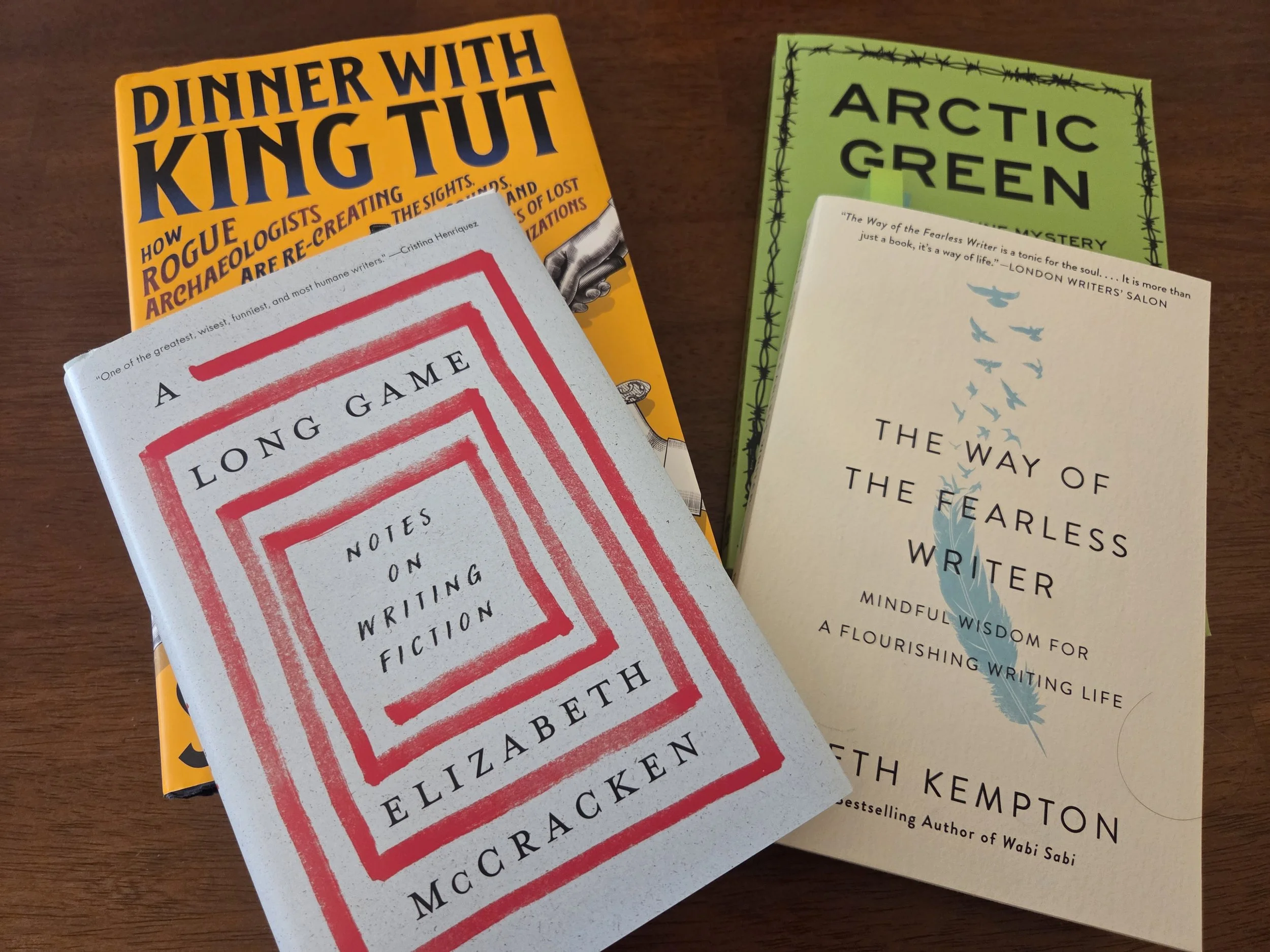
Photo by author
It’s time for my semi-annual roundup of what I’ve read and recommend this year. I’ve read 28 books so far, which is about average for me. Though I’m not someone who really cares about quantity of books - I don’t get the point of people who, say, try to reach a goal of 100 books per year, or whatever. I’m glad they’re reading, but it’s not a race.
Fiction:
The Raven Scholar - Antonia Hodgson. I started several fantasy series this year, and this is the only one where I plan to pick up the second book when it comes out. Love the main character, love the plotting, love the worldbuilding, and I’m eager to see what happens next. Political machinations, a murder mystery, and plot twists galore. And gorgeously written to boot. Highly recommend.
Between Shades of Gray - Ruta Sepetys. This falls under YA fiction, mainly because it’s told from the point of view of the protagonist, 16 year old Lina. During WWII, she and her family are taken by the Soviet secret police and shipped, with thousands of others, to a work camp in Siberia. It’s her story of survival in a brutal world, and her attempts to contact her father, who was taken separately from the rest of the family. It’s based in true events that happened to many Lithuanians, a story I’d never heard until I read the book.
The Impossible Fortune - Richard Osman. Another fun outing in the Thursday Murder Club series. The four senior protagonists and their friends have another unlikely adventure. I read so many heavy books, this came as a breath of fresh air. If you love the series, you’ll love this one as well.
Son of Nobody - Yann Martel. A classics researcher discovers an untold story of an ordinary soldier in the Trojan War, and also, in footnotes, tells his own story of what is happening within his own family at the same time as he’s conducting what he hopes will make his academic reputation. Telling more would give it away, but it’s an amazing juxtaposition of history, literature, and a heartbreaking contemporary story.
The Adjunct - Maria Adelman. This almost didn’t make the list, because the ending did not quite land for me (which is the case for so many novels I read this year - they tend to fall apart in the last quarter). I think it will mainly appeal to those in academia - IFKYK - and it is a dark, dark vision of the adjunct life. It pulls no punches, although I thought the main character was passive to a fault.
Arctic Green - Allison Keeton. The second book in the mystery series set in small-town Maine. One of those great series that puts you right in the setting, where you feel like you could drive down the street and identify the people. Keeps you guessing until the end, and wraps a nice character arc for the sleuth as well, as she slowly comes to terms with her family’s past.
Nonfiction:
Dinner with King Tut: How Rogue Archeologists Are Re-creating the Sights, Sounds, Smells, and Tastes of Lost Civilizations - Sam Kean. Just what it says: a fascinating exploration of “experimental archeology,” where the author tells of (and occasionally joins) professional and amateur archeologists who do things like try to brew beer as the ancient Egyptians did, or build medieval-style catapults, or hunt with spears with hand-knapped points. Using the materials and techniques of the periods they study, they learn what it was really like to build a Roman road or sail a Polynesian watercraft. Kean intersperses fictional stories throughout, to illustrate how a person from the era in question might have lived. Fascinating and a fun read.
A Long Game: Notes on Writing Fiction: A Practical Guide to Character, Plot, Revisions, and the Blank Page - Elizabeth McCracken. A rambling, insightful guide to fiction writing, with many notes and anecdotes about her own process. I wouldn’t recommend it to beginning fiction writers, but it’s a terrific book to open to a random page before a writing session to glean wisdom and inspiration.
A Walk in the Park: The True Story of a Spectacular Misadventure in the Grand Canyon - Kevin Fedarko. Weaves together a history of the Grand Canyon as a national park and sacred space for native tribes; and a personal (and sometimes hilarious, sometimes sobering) account of the author’s traversing of the length of the canyon on foot. Will make you want to go there immediately, whether you’ve been there before or not. Will also convince you to never, never, a) take a helicopter ride over the rim and b) actually attempt to through-hike the canyon yourself.
The Way of the Fearless Writer: Mindful Wisdom for a Flourishing Writing Life - Beth Kempton. Written from a Japanese-Buddhist perspective, this leads you on a journey through three “gates” of Desirelessness, Formlessness, and Emptiness. The focus is on embracing ease and play, and removing blocks. It also leads from the hazy space of idea generation to putting your work out into the world. With many exercises throughout, it’s designed to make you, as the title says, a fearless writer, whether you’re on a first draft or navigating publishing successes and failures. I liked many of the exercises, and the emphasis on understanding what phase your writing is in, each of which calls for a different approach.
The Let Them Theory - Mel Robbins. The premise is simple: Let Them be who they are, and Let Me choose how to respond (or not). Deceptively simple, as anyone who actually tries this advice finds out. We all have a myriad of preferences, dislikes, and desires, often focused on what we think other people should do. Surprisingly, they just as often fail to meet our expectations. It’s not, as some fear, about “letting people walk all over me,” but about choosing your boundaries,and your peace, in all kinds of situations, by understanding and accepting what you can and can’t control.
Meditations for Mortals: Four Weeks To Embrace Your Limitations and Make Time for What Counts - Oliver Burkeman. By the author of 4,000 Weeks: Time Management for Mortals, this book gives you a daily meditation and practice to take with you, helping you focus on what truly matters to you. In a world of constant overwhelm, busyness, and distractions, these practices will help you see “productivity” differently. Burkeman reminds us that there is nowhere to “get to” when we will feel ready to tackle the important things; we can take action in any moment, because all we truly have is now.
There were some novels that have been hyped up that I just didn’t love, mainly because the final quarter or so didn’t live up to the rest of the book. I don’t tend to talk about books I don’t like, because, well, everything is subjective, and I don’t want to be mean. Maybe I’m just not a fan of dark endings, where the people are so broken that you don’t get the sense they will be able to climb out of their hole.
Some of those that fell into that category are: A Court of Thorns and Roses, by Sarah J. Maas. The end was too ridiculously bloody, but the main issue is the the heroine is dumb for no other reason than because the plot needs her to be dumb until the last possible second - well, really, beyond - for the ending to work. It would have made more sense if she thought she’d figured out the riddle, but was afraid to say it because the consequences were so dire if she was wrong. It could have raised the tension and the stakes much better and still achieved the same ends. But honestly, I’m not a romantasy gal, so maybe I’m nit-picky.
Yesteryear, by Caro Claire Burke. There was a lot to like at first about this satire of trad-wife influencers. The voice was spot-on, and believable. The more I read, the less I cared for it. Not one of the characters was at all likable. Even if you don’t like a main character, you need to be able to root for them or laugh at them, and although the MC here was laughable at the beginning, she was just plain unlikeable by about halfway through. The mystery of how she ended up in 1855 kept me going… but the end was rushed and totally unrealistic, with plot holes galore. There was nothing for her to learn, and the point that “the patriarchy always gets a pass” was too on-the-nose (although reading other reviews, other readers seemed to miss it entirely). Then I read in the acknowledgements that the book was optioned by Amazon as an unfinished manuscript and, it seems, basically finished by the author, an actress, and a bunch of studio execs, and I realized why the ending did not quite work.
The Adjunct, mentioned above, made the list of favorites because I worked in academia for so many years and recognize the people and power structures, and the writing was very good. But honestly, the ending was just an increasing pile-on of negative scenarios, and the main character was so passive and self-pitying throughout that by the end I thought she deserved her fate.
In these times, I guess I’m just not looking for books that have unhopeful endings. Have you read any of these books that I liked or disliked? Do you have any great recommendations? If so, please let me know in the comments! (I mean, my TBR list is already absurdly long, but I am always adding new books…)
That’s 2026 so far. I have stacks of books on the TBR pile, and more on request from the library. No doubt, more than enough to keep me going for the rest of the year.
Do you have any great recommendations? If so, please let me know in the comments! (I mean, my TBR list is already absurdly long, but I am always adding new books…)
If you like this, head on over to theContact Pageand sign up to get my monthly newsletter featuring tips on creativity, productivity, and the writer’s craft.