The Best Books I Read in the Second Half of 2025
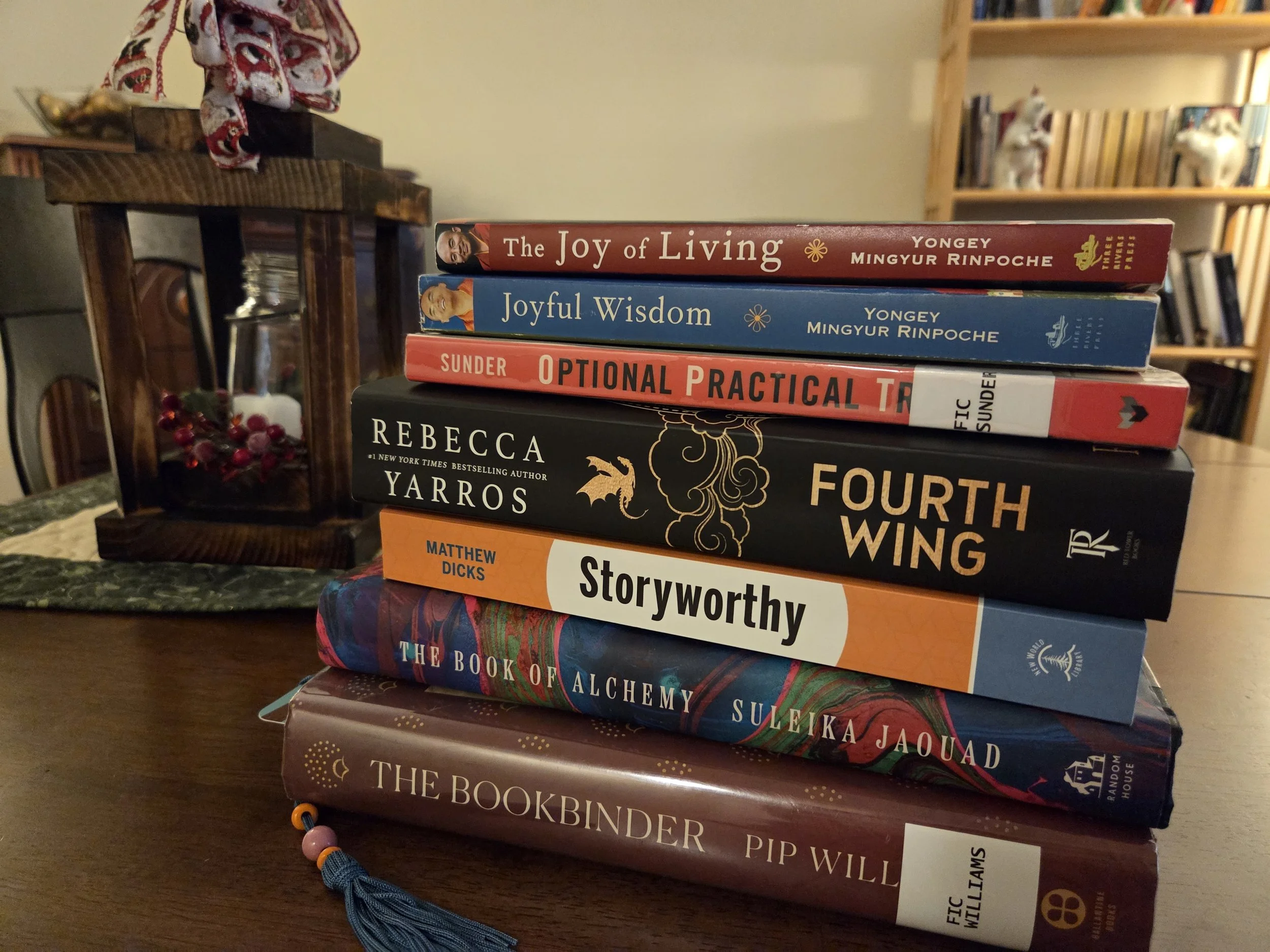
I read another 31 books in the second half of the year, for a total of 63. I love looking back at the books I’ve read and seeing which ones still stand out for me. Here they are, in no particular order:
Fiction:
Yellowface - R.F. Kuang. This was different to other more fantastical books of Kuang’s I’ve read. A satire of the contemporary literary publishing world, it’s the story of a white writer who takes over the persona of an Asian-American literary darling (her former best friend) – and finally finds the success she’s coveted. Her life soon spirals out of control as she tries to keep up the pretense, with disastrous consequences. I will say that the reviews of this book are very mixed. It does bring up a lot of ideas about cultural appropriation and identity politics, diversity in publishing, as well as the cutthroat world of literary fiction. Kuang doesn’t always nail things perfectly, but it will make you think. And laugh. And cringe.
The God of the Woods - Liz Moore. A girl goes missing at a summer camp in the Adirondacks, and she’s not just another camper, but the “difficult” daughter of the owner of the estate the camp is part of. Not only that, her brother disappeared years ago in eerily similar circumstances. The novel weaves in and out of several characters’ points of view, slowly revealing what really happened to both. Class conflicts, family secrets, and the deep woods... this book kept me guessing to the end.
The Fourth Wing - Rebecca Yarros. I know, this series has been a bestselling juggernaut - and I did read all three books currently available. I liked the first one best, since it was the most coherent and well-paced. There were definitely a few quirks I found irritating, and I found the over-the-top sex scenes unintentionally hilarious. But it was compulsively readable. I found myself rooting for Violet Sorrengail and her quest to become a dragon rider despite truly horrific obstacles, including murderous fellow cadets, fiery dragons, and the brutal training itself.
Optional Practical Training - Shubha Sunder. I’ll be honest, I found the ending abrupt and disappointing. But the structure of this novel intrigued me; it’s more vignettes, or a series of conversations. It follows Pavitra, a young Indian woman who has completed her bachelor’s degree in the U.S. and is now doing her OPT (Optional Practical Training) at a high school in Waltham, Massachusetts. Each chapter focuses on different relationships she encounters in her year of OPT, from fellow teachers, students and parents, old friends, her Cambridge landlord, and a young Colombian man she dates. We don’t really get the typical interiority of a novel, but we see Pavitra’s world through her conversations with these people. It shows rather than tells in a way that feels organic. For me, it was also fun since I knew the settings well and could picture them in my head.
The Bookbinder - Pip Williams. Peggy is a bookbinder at the Oxford University Press at the start of WWI. She and her sister both work at the Oxford University Press bindery, drudge work that allows her tantalizing glimpses of a larger world. She’d love to go to Somerville, the women’s college she passes every day, but she is not of the right class. Her job is to bind the books, not read them, as her supervisor constantly reminds her. But even as the war opens up new possibilities for education and love, family responsibilities threaten to hold her back. I loved this for the intersection of class, gender, ambition, family, and tremendous details of working in a bindery in the early 20th century. A beautiful evocation of “the home front” in that era. I worked in a bindery myself one college summer and I remember the monotony but also my fascination with the process (which quickly faded – I determined that I did not want to be doing that for the rest of my life!).
Nonfiction:
The Joy of Living: Unlocking the Secret & Science of Happiness and Joyful Wisdom: Embracing Change and Finding Freedom - Yongey Mingyur Rinpoche with Eric Swanson. I really enjoy Mingyur Rinpoche’s approach to teaching. He translates Buddhist principles to simple precepts for anyone interested in applying meditation practices to daily life. He also looks to neuroscience research to support what Buddhist masters have been saying for thousands of years about how to live better, with less anxiety and greater happiness. These are the kind of books you can read quickly, but also go back to over and over for new insights each time.
The Book of Alchemy: A Creative Practice for an Inspired Life - Suleika Jaouad. I saw this in a bookstore and grabbed it right away for its bright colors and focus on 100 journaling prompts from a variety of people like Dani Shapiro, Alain de Botton, and many other artists, writers, and creatives – some well known and others not. Each chapter includes a brief essay and a prompt. They’re separated into sections such as “On Memory,” “On Fear,” or “On Love,” and others. You can go through the prompts in order, or simply pick at random and find one that speaks to you – or be surprised! Not all of them landed for me, but there are enough that no matter what, you’re sure to find some inspiration to keep your Morning Pages or journaling practice fresh.
Art Above Everything: One Woman's Global Exploration of the Joys and Torments of a Creative Life - Stephanie Elizondo Griest. The author traveled the world to interview women dancers, visual and performing artists, writers, and musicians who prioritize their creative work over everything else, no matter their cultural pressures to conform to more traditional roles. It was fascinating to read the stories of women from India, Rwanda, Iceland, Mexico, New Zealand, Cuba and many other countries and see how they’ve managed to maintain and thrive in their creative practices. So many women, and all inspirational in various ways.
Storyworthy - Matthew Dicks. The author is a 36-time Moth Storyslam winner and 5- time GrandSlam winner. His book is geared to people telling stories aloud in front of crowds, whether at a Moth event, presenting in a boardroom, or doing any kind of teaching or training. Many of the principles he talks about, though, can also be used in fiction or memoir. He has a solid understanding of what makes a story compelling and breaks it down in easy-to-understand lessons. Finding the right beginning, knowing your 5-second moment (aka the Point of your story), the power of setting, evoking emotion... there are plenty of lessons you can apply from anything to telling a story to your friends and family to writing your novel.
That’s it for 2025! I have my never-ending list of books I’d like to read plus an embarrassingly large pile of books sitting on my shelf waiting to be read, plus a couple of books I need to pick up from the library... so looks like I’ll be starting off 2026 with plenty of interesting options.
How about you? Let me know your favorite book from 2025 in the comments!
If you like this, head on over to the Contact Page and sign up to get my monthly newsletter featuring tips on creativity, productivity, and the writer’s craft.